Why do businesses need finance?
October 22, 2026
-
0
min read
0
min read
Most companies borrow for one of three reasons: to cover the gap between paying and being paid, to buy something that earns before it's paid for, or to grow faster than cash flow allows. All three are timing problems rather than signs of a business in trouble. Whether borrowing is the right answer comes down to a single question – can you name where the repayments will come from? That is not the same question as whether you need the money.
Money leaves most businesses before it arrives. A VAT bill falls due, payday comes round, a supplier wants settling, and the invoices that pay for all of it are still sitting with a customer.
This is the normal condition of a healthy company, not a warning sign. Our research, published in April 2026, found that 60% of small businesses spend at least half the year with more money going out than coming in, and that the average one is owed £22,000 at any given moment. It bites hardest on businesses with seasonal income or customers on long payment terms, where a quarterly bill can land in a month when very little comes in.
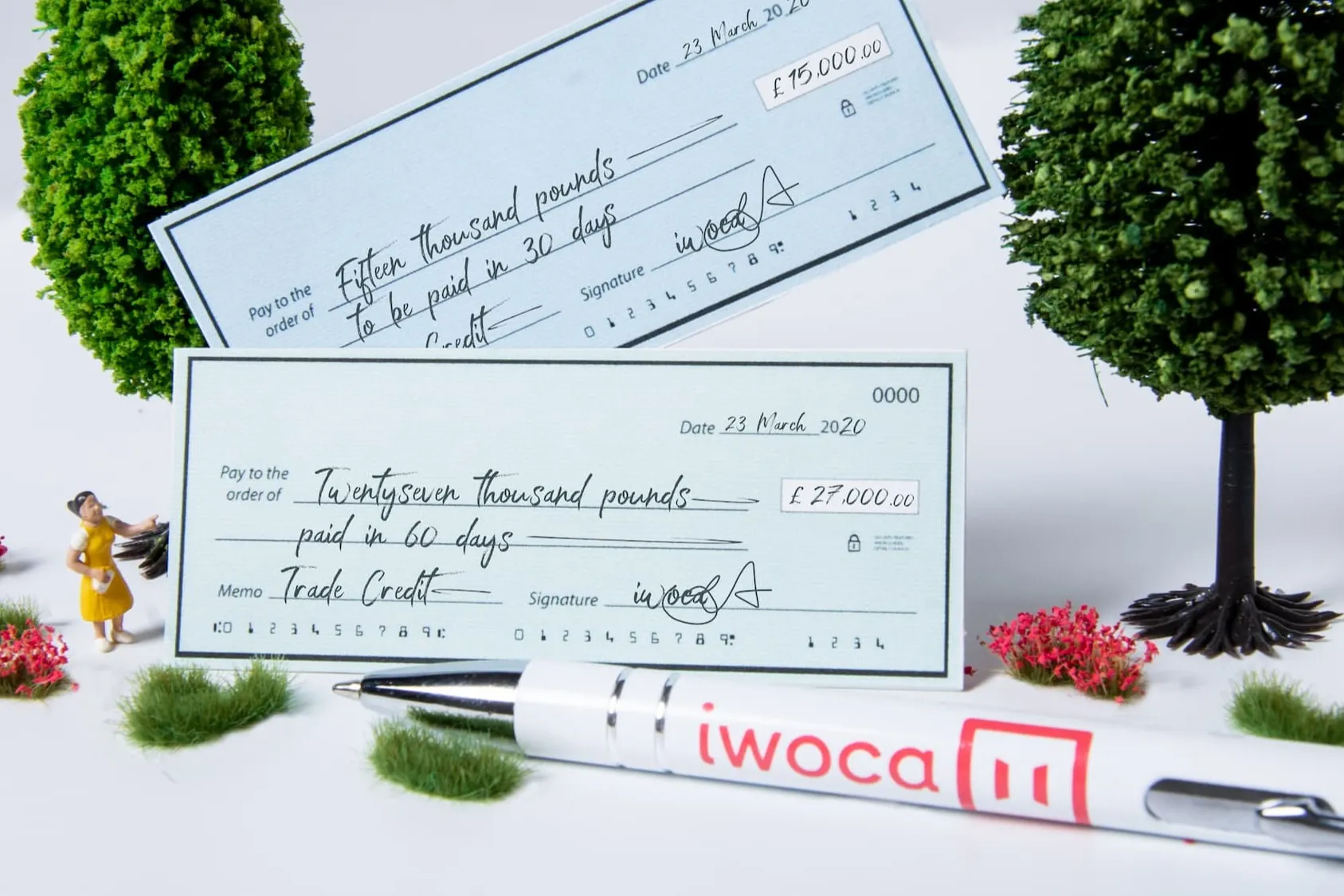
The gap has also been widening, and not by choice. Our research with Cebr found that the share of business-to-business suppliers offering payment terms longer than 60 days rose from 7% in 2020 to 17% in 2024. If you sell to larger companies, those terms are often set by the buyer.
Finance closes that gap, so the bill is paid on time. That is what working capital means in practice: the money a business needs to keep running between the day it spends and the day it gets paid.
The second reason is an asset that pays for itself. A delivery company wins a contract that needs another van, and the van earns the money that repays it – but only once it's on the road. Save up for it instead, and the contract goes to whoever could start sooner.
The shape of the finance matters more here than the amount. Where the thing you're buying holds its value, asset finance is often cheaper than an unsecured loan, because the lender takes security over the asset itself. The trade-off is that the asset is tied to the agreement. An unsecured loan usually costs more and leaves the van yours outright.
Either way, work out what the asset will earn before you decide what to borrow. A forecast showing the repayments covered by the revenue the asset brings in is the whole case, and it's worth having an accountant check it.
Growth consumes cash before it produces it. A bigger order needs stock and hours before the invoice is even raised, let alone paid. A second site costs a deposit, a fit-out, and wages for months before it breaks even. Hiring ahead of revenue is the same bet in a different shape.
That is why profitable companies still run out of money, and why waiting until you can afford something out of profit can quietly mean never doing it.
Starting up is the hardest version of this, because there is no trading history to lend against. Deposits, legal fees, accounting fees, and the first piece of equipment all come before the first sale. Most lenders, including us, can only lend a small amount to a company with no revenue yet, so new companies usually fund the gap from the directors' own money or from grants.
Reasons to borrow are easy to assert. Whether borrowing works is the harder question, so we asked Capital Economics to measure it, using current-account data from thousands of our customers.
Their findings, published in November 2025, were that taking a loan was associated with monthly revenues nearly a fifth higher – 19% – within a year, compared with the same businesses having accessed no finance at all.
Association is not proof that the loan caused the growth. A company borrowing to fund an order it has already won is, by definition, a company with an order. But it does suggest the money mostly goes into something that earns, which is what the three reasons above describe. It says least about borrowing to cover a loss.
Finance fixes timing. It does not fix a business that loses money on every job. If the shortfall returns every month once the loan is spent, the borrowing has bought time rather than a solution, and the repayments make the following month harder.
Two questions tell the cases apart:
Where it's the second of those, the fix is usually somewhere other than a lender: your prices, your payment terms, chasing invoices sooner, or a cost that has crept up. An accountant will spot it faster than we will. And if the company is already struggling to meet commitments it has, speak to a qualified adviser before taking on more.
Once you know what the money is for, the choice of source follows from it: how long you need it, what it costs, and how much control you are willing to give up. Our guide to sources of business finance compares every option a UK limited company can use, from retained profit and supplier terms through to loans, overdrafts, invoice finance, equity, and grants.
An iwoca Flexi-Loan is built for the first reason on this page: paying something on time when your own money is simply arriving late. If a VAT or corporation tax bill is due before your cash comes in, it lets you pay it on time and repay early for free once your sales catch up. If payday comes before a big customer pays you, it can cover wages so your team is paid on time. You choose a fixed term of between 12 months and five years, so the repayments are predictable, and because there is no fee for repaying early you can clear it as soon as the cash arrives – many of our customers only take out our finance for a few weeks, or even days. We lend to UK limited companies.
Flexi-Loan in action: CQD Cleaning Services
Mark Natthan needed to hire ahead of revenue and bridge the gaps between jobs. Having someone at iwoca who understood his business gave him the confidence to do it, and he still speaks to his account manager regularly. Read Mark's story.
iwoca is one of Europe's leading non-bank lenders. Since 2012, we've lent over £4.5 billion to 100,000 small and medium-sized businesses in the UK and Germany.
iwoca has won a number of awards, including Moneynet's best small business lender (2024) and best small business provider (2025). We've also been featured in major media outlets including The Independent, Forbes and the Financial Times.
Borrow £1,000 to £1 million to cover a gap, buy stock or take on your next order. Apply in five minutes and seee what you qualify for.
Borrow £1,000 to £1 million to cover a gap, buy stock or take on your next order. Apply in five minutes and seee what you qualify for.